
Is 925 Silver Good Quality? Complete Sterling Silver Guide
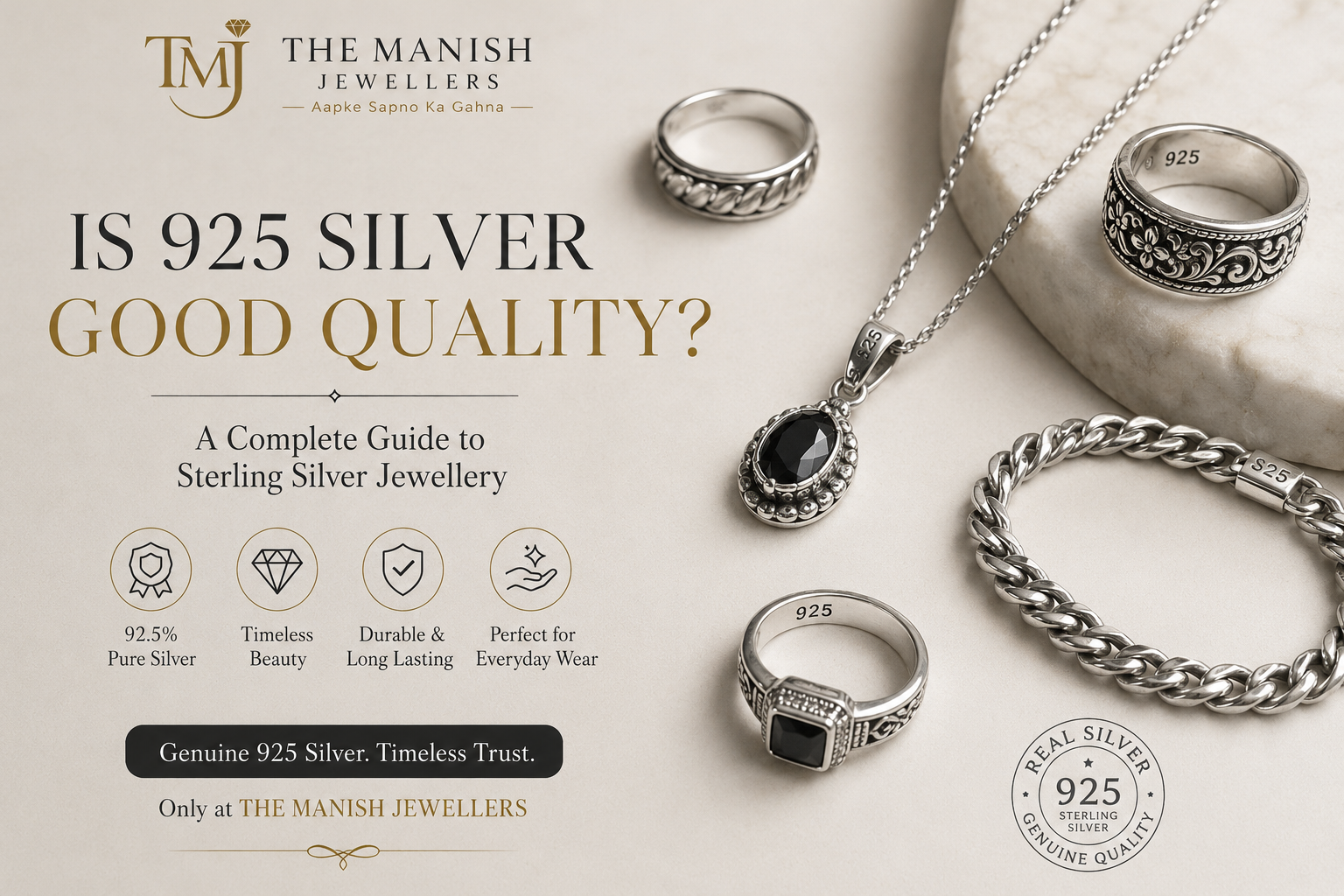
Is 925 Silver Good Quality? A Complete Guide to Sterling Silver Jewellery
By THE MANISH JEWELLERS | October 2026
When buying silver jewellery, you may have noticed the number 925 stamped on a ring, chain, bracelet, pendant, or pair of earrings. But what does 925 silver actually mean? Is it good quality? Can you wear it every day? And how can you identify genuine 925 sterling silver jewellery?
If you are planning to buy silver jewellery for yourself or a loved one, understanding silver purity can help you make a more informed decision.
At THE MANISH JEWELLERS, we believe that beautiful jewellery begins with knowledge, quality, and trust. In this guide, we explain everything you need to know about 925 sterling silver, from its purity and durability to identification methods and everyday care.
What Is 925 Silver?
925 silver, also known as 925 sterling silver, is an alloy containing 92.5% pure silver and 7.5% other metals, commonly copper.
Pure silver is naturally soft and can bend or scratch more easily than many jewellery buyers expect. Adding a small proportion of other metals helps improve its strength, making sterling silver more practical for crafting wearable jewellery.
Here is what the 925 marking means:
- 92.5% silver: The proportion of silver in the alloy by weight.
- 7.5% other metals: Metals added to improve properties such as strength and workability.
- 925 stamp: A marking commonly used to indicate a sterling silver fineness of 925 parts per thousand.
For example, a 10-gram piece made entirely from a 925 sterling silver alloy contains approximately 9.25 grams of silver.
This balance of silver content and durability makes sterling silver a popular choice for rings, pendants, chains, bracelets, earrings, and other jewellery designs.
Is 925 Sterling Silver Good Quality?
Yes, genuine 925 sterling silver is a high-quality material for jewellery. It combines a substantial silver content with greater practical durability than fine silver in many everyday applications.
However, the overall quality of a jewellery piece also depends on its craftsmanship, construction, finishing, and the authenticity of the material.
Here are some reasons people choose sterling silver jewellery.
1. A Balance of Purity and Durability
Pure silver, often marked 999, is softer than sterling silver. This can make it less suitable for jewellery that experiences frequent knocks, pressure, or everyday handling.
The additional alloy metals in 925 silver help make it more practical for creating wearable designs.
Whether you prefer a classic silver ring or a contemporary bracelet, sterling silver offers a versatile material for many styles.
2. A Timeless Silver Shine
One of the biggest attractions of silver jewellery is its bright, elegant appearance.
Its neutral colour pairs beautifully with casual outfits, traditional Indian clothing, office wear, and festive looks.
From minimalist pendants to statement rings, silver jewellery can complement different personal styles without feeling tied to a particular trend.
3. Suitable for Many Jewellery Designs
Sterling silver can be crafted into a wide variety of jewellery styles, including:
- Men's rings and statement rings
- Silver chains and pendants
- Bracelets and kada designs
- Women's rings and earrings
- Payal and toe rings
- Traditional and contemporary jewellery
Its versatility allows jewellery makers to create both simple everyday pieces and detailed designs for special occasions.
4. An Accessible Precious Metal
Compared with many gold and platinum jewellery options, silver jewellery is often available at a lower purchase price.
The final price depends on the silver weight, current metal prices, design complexity, stones, workmanship, and other applicable charges.
This makes sterling silver an appealing choice for people who want the beauty of a precious metal across a range of budgets.
Is 925 Silver Pure Silver?
No. 925 silver is not 100% pure silver, but it is a recognized high-purity silver alloy.
Understanding the difference between common silver purity markings makes shopping easier.
Silver type| Silver content| General characteristics
Fine silver, 999| 99.9%| Very high purity, relatively soft
Sterling silver, 925| 92.5%| A balance of silver content and durability
Silver alloy of lower fineness| Varies| Quality depends on its actual composition
Silver-plated jewellery| Varies| A surface layer of silver over another material
Remember that silver-plated jewellery is not the same as a solid sterling silver piece. A silver-coloured appearance alone does not establish the metal's purity.
When shopping, check the product description carefully and ask the seller to clarify the material used.
What Does the 925 Stamp on Jewellery Mean?
The 925 stamp is commonly used to indicate that a silver alloy contains 925 parts silver per 1,000 parts by weight.
You may find this marking on the inside of a ring, the clasp of a chain, or the back of a pendant.
However, there is one important point to remember: a stamp by itself is not conclusive proof of authenticity. Markings can be inaccurate or imitated, so it is wise to consider other evidence.
Before purchasing silver jewellery, check the seller's material description, invoice, available hallmarking or testing information, and return policy.
In India, consumers can also ask the jeweller about applicable BIS hallmarking and verification requirements for the particular silver item.
How to Identify Genuine 925 Silver Jewellery
If you are buying silver jewellery online or from a local shop, these checks can help you make a more informed purchase.
1. Check the Silver Marking
Look for markings such as 925, S925, or Sterling where applicable.
Inspect the inside of rings, the back of pendants, and chain clasps. Not every genuine item will display a clearly visible mark, so the absence of a stamp should be investigated rather than treated as definitive proof of fake silver.
2. Ask for a Proper Invoice
A detailed invoice can provide useful purchase information, including the seller, item description, weight, price, and stated metal purity.
For online purchases, review the product specifications and seller policies before placing an order.
3. Understand the Magnet Test
Silver is not strongly attracted to an ordinary magnet. If a piece is strongly attracted, that can be a warning sign that certain magnetic materials are present.
However, the magnet test cannot establish silver purity. Some non-silver metals are also non-magnetic, and jewellery components may contain different materials.
Treat this as a basic screening check, not a final authenticity test.
4. Look for Signs of Plating or Wear
On plated jewellery, wear may eventually expose a different-coloured base metal underneath.
Solid 925 sterling silver does not have a thin silver coating over a different base metal as its defining construction. Nevertheless, surface finishes, soldered components, stones, and other design elements can vary.
If you are unsure about a piece, ask a qualified jeweller to examine it.
5. Seek Professional Verification
For a valuable purchase or when authenticity is uncertain, professional testing is more reliable than home experiments.
Ask about suitable purity-testing methods and any relevant hallmark or certification documentation. Avoid using acids or abrasive tests at home, as these can damage jewellery.
Does 925 Silver Tarnish?
Yes. Genuine sterling silver can tarnish over time.
Tarnish commonly appears as a yellowish, grey, or dark film on the surface. It develops when silver reacts with certain substances in its environment, including sulfur-containing compounds.
Tarnishing does not automatically mean that your jewellery is fake or poor quality.
The speed of tarnishing varies according to humidity, storage conditions, exposure to cosmetics, household chemicals, and the wearer's environment.
The good news is that ordinary tarnish can often be removed with suitable silver-cleaning methods.
With proper care, sterling silver jewellery can maintain its beauty for many years.
Can You Wear 925 Silver Every Day?
Yes, many people wear 925 sterling silver jewellery daily. Its suitability depends on the specific design, how the item is worn, and the conditions it encounters.
Here are a few practical tips:
- Remove jewellery before swimming, particularly in chlorinated pools.
- Avoid direct contact with harsh cleaning chemicals.
- Put on jewellery after applying perfume, hairspray, and cosmetics.
- Remove rings and bracelets before strenuous activities that could bend or scratch them.
- Check clasps, settings, and delicate components periodically.
Rings and bracelets may experience more physical contact than pendants or earrings, so everyday wear can affect different pieces differently.
For jewellery intended for frequent use, choose a well-made design and follow the care instructions supplied by the seller.
Is 925 Silver Safe for Sensitive Skin?
Sterling silver is comfortable for many people, but it is not guaranteed to be suitable for everyone with sensitive skin.
Skin reactions can depend on individual sensitivities and the composition of the other metals in the alloy. Nickel-containing components or certain other materials may cause reactions in susceptible individuals.
If you have a known metal allergy, ask the seller about the complete metal composition, including clasps, posts, and other components. Stop wearing a piece if it causes irritation.
For earrings in particular, material transparency is important because the jewellery comes into contact with pierced skin.
How Long Does 925 Sterling Silver Last?
Well-made 925 sterling silver jewellery can last for decades and may even become a family heirloom when properly maintained.
Its lifespan depends on several factors:
- Craftsmanship: Strong construction and well-finished joints help jewellery withstand normal wear.
- Design: Thin chains and delicate settings may need more careful handling.
- Usage: Jewellery worn every day may experience more scratches and impact.
- Storage: Dry, suitable storage helps reduce tarnishing and accidental damage.
- Maintenance: Regular inspection and appropriate cleaning can help preserve its appearance.
Sterling silver is durable, but it is not indestructible. Treating it carefully can help extend its useful life.
How to Clean and Care for 925 Silver Jewellery
You do not need an elaborate routine to keep your silver jewellery looking its best.
Step 1: Clean Gently
For suitable pieces, use lukewarm water, a small amount of mild soap, and a soft cloth. Avoid soaking jewellery that contains delicate stones, glued components, or materials that may be damaged by water.
Step 2: Dry Completely
After cleaning, dry the piece thoroughly with a clean, soft cloth. Leaving moisture trapped in jewellery or its storage container is best avoided.
Step 3: Use Suitable Silver Polish
For tarnished sterling silver, use a silver-cleaning cloth or a product specifically designed for the jewellery material. Follow the product instructions carefully.
Avoid aggressive polishing on intentionally oxidized designs, plated finishes, pearls, or delicate gemstones.
Step 4: Store It Properly
Keep your jewellery in a clean, dry place, ideally in a separate pouch or an anti-tarnish jewellery box.
Separating individual pieces reduces scratches caused by chains, rings, and other items rubbing against one another.
A few simple habits can help preserve the shine and finish of your favourite silver jewellery.
925 Silver vs Silver-Plated Jewellery: What Is the Difference?
This is one of the most important differences to understand before purchasing silver jewellery.
925 sterling silver refers to a silver alloy with a stated fineness of 92.5%. Silver-plated jewellery has a layer of silver applied over a different underlying material.
Here is a simple comparison:
Feature| 925 sterling silver| Silver-plated jewellery
Construction| Sterling silver alloy| Silver surface coating over a base material
Silver content| 92.5% in the alloy| Depends on the coating and construction
Wear over time| Can scratch and tarnish| Coating may wear through
Care| Requires suitable silver care| Depends on the plating and base material
Price| Depends on weight and craftsmanship| Often lower, depending on the product
Neither category should be judged by appearance alone. Ask what material the item is made from and make sure the product description accurately reflects its construction.
925 Silver vs 999 Silver: Which Is Better?
Neither purity level is automatically better for every purpose.
Fine silver, marked 999, contains 99.9% silver and is softer. Sterling silver, marked 925, contains 92.5% silver and is generally more suitable for many jewellery designs that benefit from additional strength.
If you want a ring, chain, bracelet, or other piece intended for regular wear, 925 sterling silver is often a practical choice.
If your priority is the highest silver purity, fine silver may be more appropriate for certain applications.
The right choice depends on the item's intended use, design, and the information supplied by the seller.
Is 925 Silver Worth Buying?
For many jewellery buyers, genuine 925 sterling silver offers a useful combination of precious-metal content, attractive appearance, versatility, and everyday wearability.
It can be a good choice if you want:
- Jewellery for daily wear and special occasions.
- Designs that pair easily with different outfits.
- A precious-metal alternative to costume jewellery.
- Pieces that can be maintained and enjoyed for many years.
- A wide variety of styles, from simple rings to traditional jewellery.
However, silver jewellery should not automatically be treated as a guaranteed financial investment. Its resale value depends on factors such as silver prices, actual purity, weight, condition, design, and applicable deductions or charges.
Buy jewellery primarily for its quality, craftsmanship, design, and personal meaning. If resale value matters to you, ask the seller about the relevant terms before purchasing.
Frequently Asked Questions About 925 Silver
1. Will 925 Silver Turn My Skin Green?
Genuine 925 silver does not usually turn skin green, but reactions can vary depending on the alloy, other jewellery components, perspiration, and individual skin chemistry. If discoloration or irritation occurs, stop wearing the item and check its composition.
2. Can I Wear 925 Silver in the Shower?
It is generally better to remove sterling silver jewellery before showering. Repeated exposure to soap, shampoo, and moisture can contribute to tarnishing or affect certain finishes and components.
3. Does Real 925 Silver Turn Black?
Yes. Genuine sterling silver can develop a dark tarnish because of reactions with substances in the surrounding environment. Proper cleaning can often restore its shine.
4. Is 925 Silver Better Than Stainless Steel?
They serve different purposes. Sterling silver contains a substantial proportion of precious silver and develops a characteristic silver tarnish. Stainless steel is a different metal alloy with its own durability and maintenance properties.
The better choice depends on your priorities, budget, design preference, and the quality of the particular item.
5. Is 925 Silver Suitable for Gifts?
Yes. Sterling silver rings, pendants, chains, bracelets, and earrings are popular gift choices for birthdays, anniversaries, festivals, and other meaningful occasions.
Choose a design that suits the recipient's preferences, and verify the material and sizing before purchasing.
6. How Can I Check Whether 925 Silver Is Genuine?
Start by checking the product description, seller reputation, invoice, and available hallmarking or testing documentation. A 925 stamp and magnet test alone cannot conclusively prove authenticity. Seek professional verification if necessary.
7. Does 925 Silver Lose Its Value?
Silver prices fluctuate, and jewellery resale prices depend on purity, weight, condition, workmanship, and buyer policies. You should not assume that a piece will retain its full original retail price.
8. Is 925 Silver Good for Men's Jewellery?
Yes. Sterling silver is used in many men's rings, bracelets, chains, pendants, and kada designs. Its appearance works well with both understated everyday styles and bold statement pieces.
9. How Should I Store Sterling Silver Jewellery?
Store it in a cool, dry place, preferably in a separate pouch or anti-tarnish box. Keep individual pieces separated and avoid humid storage conditions.
10. What Should I Check Before Buying 925 Silver Online?
Review the stated purity, product photographs, dimensions, weight where available, invoice details, return policy, shipping terms, and seller's reputation. If any material information is unclear, ask the seller before placing your order.
Final Thoughts: Choose Silver Jewellery with Confidence
So, is 925 silver good quality?
Yes. Genuine 925 sterling silver is an excellent jewellery material for many people because it balances high silver content with practical durability and timeless style.
The most important thing is to understand what you are buying. Check the material description, ask about authenticity, choose good craftsmanship, and care for your jewellery properly.
At THE MANISH JEWELLERS, our goal is to help customers make informed jewellery choices and appreciate the beauty of silver. Whether you are looking for a classic ring, an elegant pendant, a stylish bracelet, or a meaningful gift, understanding silver quality is a valuable first step.
Discover silver jewellery that complements your style and makes every moment special with THE MANISH JEWELLERS.
Explore our website: https://themanishjewellers.com
Aapke Sapno Ka Gahna.