
925 silver vs pure silver
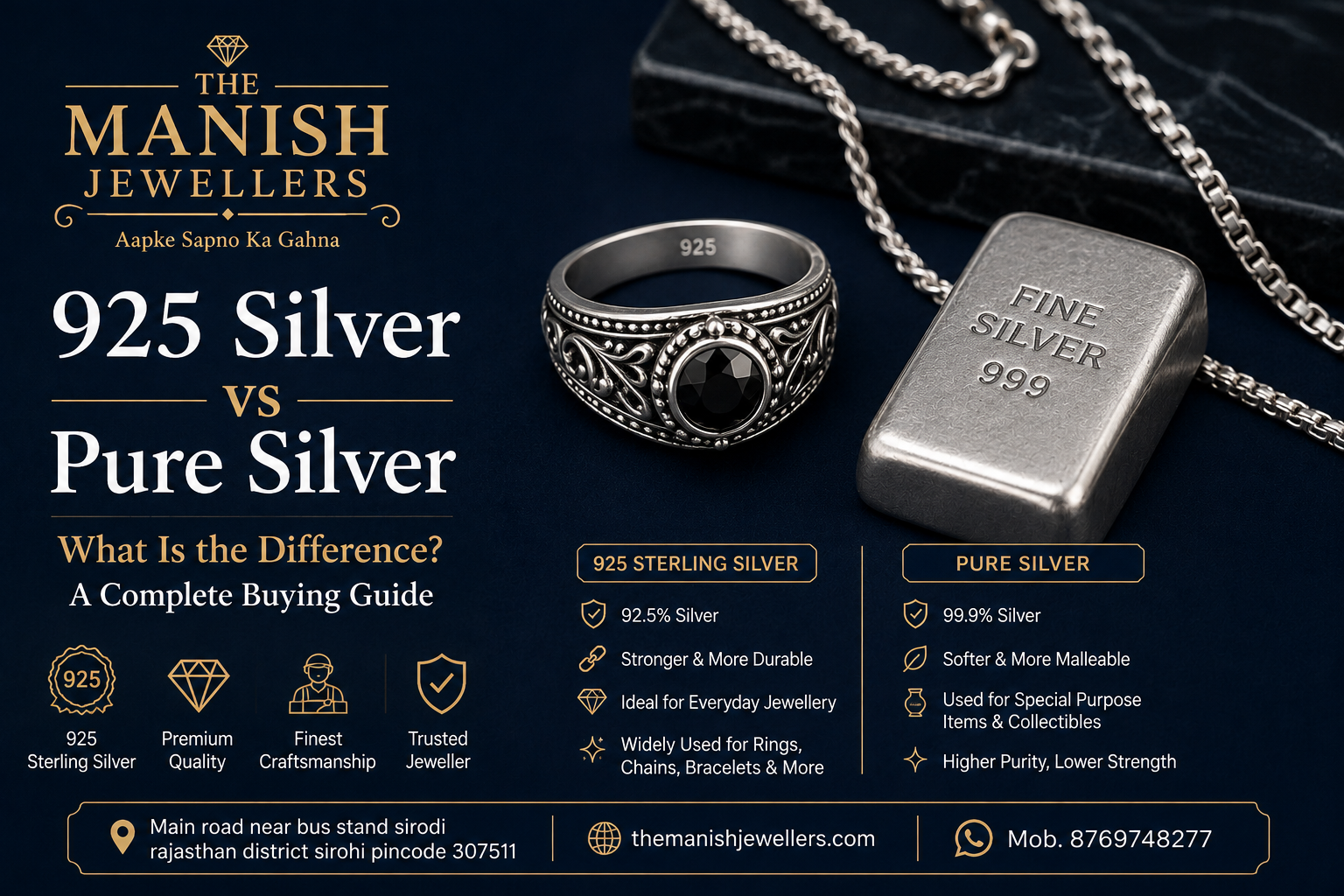
925 Silver vs Pure Silver: What Is the Difference? A Complete Buying Guide
By THE MANISH JEWELLERS
When shopping for silver jewellery, you may come across terms such as pure silver, 925 sterling silver, and fine silver. But what do these terms actually mean? Which type is better for everyday wear? And what should you check before buying silver jewellery online?
Understanding the difference can help you choose jewellery that suits your style, budget, and lifestyle.
At THE MANISH JEWELLERS, we believe that every customer deserves clear information before making a purchase. In this guide, we explain the differences between 925 sterling silver and pure silver, including their purity, durability, appearance, and everyday uses.
1. What Is Pure Silver?
Pure silver, commonly called fine silver, generally contains 99.9% silver. It is valued for its high purity, bright appearance, and natural metallic lustre.
However, pure silver is relatively soft compared with sterling silver. It can bend, scratch, or lose its shape more easily under everyday wear.
Fine silver is often used for certain decorative objects, collectible items, and jewellery designs where high silver content is a priority.
Although its purity is higher, pure silver is not automatically the best choice for every jewellery application. The right material depends on how the piece is designed and how you intend to wear it.
2. What Is 925 Sterling Silver?
925 sterling silver is an alloy containing 92.5% silver and 7.5% other metals, usually copper.
The additional metal improves the strength and practicality of the material, making it widely used for jewellery.
925 sterling silver is commonly used to create:
- Silver rings for men and women
- Chains and pendants
- Bracelets and kada
- Earrings and nose pins
- Silver bangles and necklaces
- Contemporary and traditional jewellery designs
The term “925” refers to the silver content of the alloy. It does not mean that the jewellery contains 92.5% gold or that it is automatically certified by a hallmarking authority.
When buying a piece, check its product description, authenticity documentation, and applicable hallmarking information.
3. 925 Silver vs Pure Silver: Key Differences
Here is a simple comparison to help you understand the two materials.
Feature| Pure Silver| 925 Sterling Silver
Silver content| Usually 99.9%| 92.5%
Other metals| Very little in fine silver| Usually 7.5%
Hardness| Relatively soft| Generally harder
Everyday jewellery| May be less suitable for designs requiring strength| Widely used for everyday jewellery
Scratch resistance| Can scratch relatively easily| Can still scratch, but is generally more practical for many jewellery designs
Tarnishing| Can tarnish| Can tarnish
Common applications| Selected jewellery and decorative items| Rings, chains, bracelets, earrings, and more
The main difference: Pure silver has a higher silver content, while 925 sterling silver combines high silver purity with additional strength for many jewellery applications.
Actual durability depends on the thickness, design, finishing, and construction of the individual piece.
4. Which Is Better for Everyday Jewellery?
For many everyday jewellery designs, 925 sterling silver is a practical choice.
Its alloy composition generally makes it more suitable for items that experience regular handling and movement, such as rings, chains, and bracelets.
Consider your needs:
Silver rings
Rings are exposed to friction, impacts, and contact with everyday objects. Sterling silver is widely used for rings because it offers a useful balance of silver content and strength.
Silver chains
Chains need links that can withstand regular movement. Sterling silver is commonly used to create different chain styles, from delicate designs to heavier statement pieces.
Silver bracelets and kada
Bracelets and kada may encounter repeated contact with surfaces. Design quality, thickness, clasp construction, and finishing are especially important.
Special-occasion jewellery
For jewellery worn occasionally, the material can be chosen according to the design, intended use, and personal preference.
Remember that neither pure silver nor sterling silver is indestructible. Both require suitable care.
5. Does 925 Silver Look Different from Pure Silver?
Both materials can have a bright, attractive silver appearance.
For most buyers, the visual difference is not a reliable way to identify silver purity. Lighting, polishing, surface treatment, plating, and design can all influence how jewellery looks.
Two pieces may look almost identical while having different silver compositions.
That is why you should not rely on colour or shine alone when purchasing silver jewellery. Instead, review the stated purity, available documentation, and applicable hallmarking.
A trustworthy seller should provide clear product information and answer questions about the jewellery.
6. Which Type of Silver Tarnishes More?
Both pure silver and 925 sterling silver can tarnish.
Tarnishing occurs when silver reacts with sulphur-containing compounds in its environment, creating a darker layer on the surface.
The rate of tarnishing can depend on several factors:
- Humidity and storage conditions
- Exposure to cosmetics and chemicals
- Environmental pollutants
- Frequency of use
- Surface finish and product construction
Because sterling silver contains other metals, its surface behaviour can differ from that of fine silver. However, it is incorrect to assume that one type will never tarnish.
How to maintain your silver jewellery
- Store pieces in a clean, dry jewellery box or suitable anti-tarnish pouch.
- Keep jewellery away from perfumes and harsh chemicals.
- Wipe suitable pieces gently with a soft polishing cloth.
- Follow the care instructions for plated and stone-studded designs.
With appropriate care, you can help maintain the appearance of your jewellery.
7. Is 925 Sterling Silver Real Silver?
Yes. Sterling silver marked 925 refers to an alloy containing 92.5% silver.
It is a recognised silver standard used widely in jewellery. The remaining percentage consists of other metals that help improve the alloy's properties.
However, a “925” stamp alone does not conclusively prove a particular product's authenticity.
Before purchasing, look for:
- Clear silver purity information
- Applicable hallmarking and supporting documentation
- A detailed product description
- Transparent pricing and weight information
- A proper bill and clear seller contact details
These checks help you make a more informed decision.
8. Is Pure Silver More Expensive Than 925 Silver?
The answer depends on several factors.
Pure silver contains more silver by weight than 925 sterling silver. However, the final jewellery price is not determined by purity alone.
Other factors may include:
- The weight of the silver
- The current silver price
- Manufacturing and labour costs
- Design complexity
- Stone settings and other materials
- Plating, finishing, and packaging
- Taxes and applicable charges
A heavier or more intricate 925 silver design can cost more than a simple piece made from fine silver.
When comparing products, review the purity, net silver weight, making charges, and total payable price rather than looking at the purity percentage alone.
9. How to Choose the Right Silver Jewellery
Before making a purchase, ask yourself a few questions.
How often will I wear it?
For frequent use, consider designs with suitable thickness, secure construction, and comfortable sizing.
What style do I prefer?
Minimalist rings and chains may suit everyday outfits, while traditional bangles and statement pieces may be more appropriate for special occasions.
What information does the seller provide?
Look for transparent purity details, dimensions, weight, product photographs, care instructions, and return terms.
Does the price make sense?
Compare similar products using their silver weight, design, finishing, and total price.
Choosing jewellery becomes easier when you understand both the material and the product itself.
10. Discover Silver Jewellery at THE MANISH JEWELLERS
At THE MANISH JEWELLERS, we believe jewellery should combine thoughtful design, timeless style, and a dependable buying experience.
Our vision is to help customers discover jewellery that reflects their personality and suits their special moments.
Whether you are looking for a stylish silver ring, an elegant chain, a bracelet, a kada, or a meaningful gift, understanding the material helps you shop with greater confidence.
We believe that informed choices and proper care make the jewellery-buying experience more rewarding.
Explore our available collections at:
https://themanishjewellers.com
THE MANISH JEWELLERS — Aapke Sapno Ka Gahna.
Frequently Asked Questions
Is 925 silver better than pure silver?
For many jewellery designs, 925 sterling silver offers a practical balance between high silver content and strength. Pure silver has a higher silver percentage but is relatively soft.
Does 925 sterling silver contain real silver?
Yes. Sterling silver consists of 92.5% silver and typically 7.5% other metals.
Can 925 silver turn black?
Yes. Sterling silver can tarnish when exposed to sulphur-containing compounds and certain environmental conditions.
Is pure silver 100% silver?
Not always. Fine silver commonly refers to silver that is 99.9% pure, rather than absolutely 100% silver.
How can I check whether silver jewellery is genuine?
Review the purity marking, applicable hallmarking, documentation, and seller information. A stamp or visual inspection alone cannot conclusively establish authenticity.
Which silver should I buy for a ring?
925 sterling silver is commonly used for rings because it is generally harder than fine silver. Consider the ring's construction, intended use, and care requirements as well.
Final Thoughts
Pure silver and 925 sterling silver both have their own advantages. Pure silver offers a higher silver content, while sterling silver is widely used in jewellery because its alloy composition generally improves practicality and strength.
The best choice depends on the design, intended use, quality, and care requirements.
Before buying, understand the purity, compare the total price, and choose a seller who provides transparent product information.
At THE MANISH JEWELLERS, we believe every jewellery purchase should begin with knowledge and end with confidence.
THE MANISH JEWELLERS — Aapke Sapno Ka Gahna.